HomeIndustriesAviation

Industries We Serve

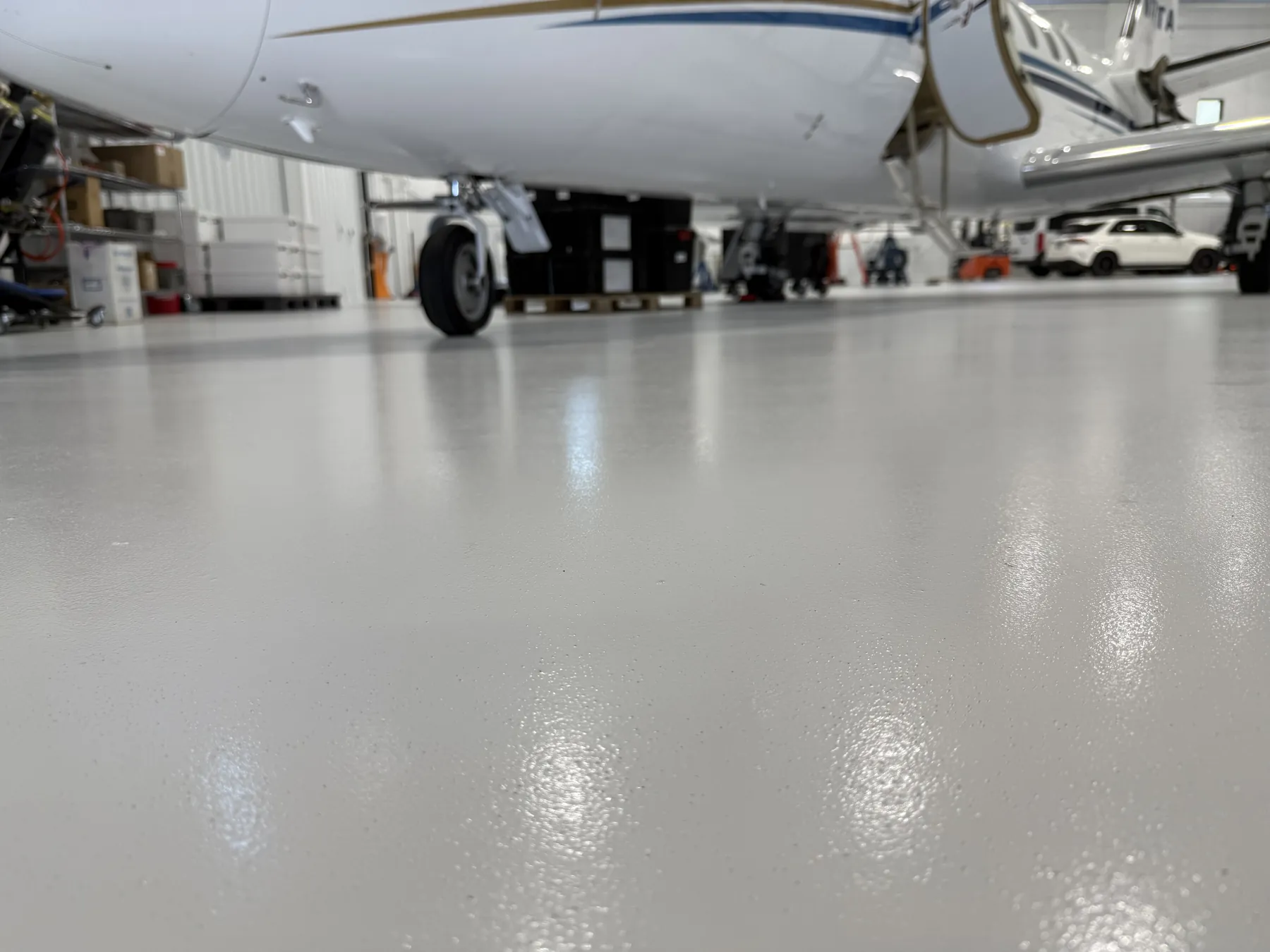
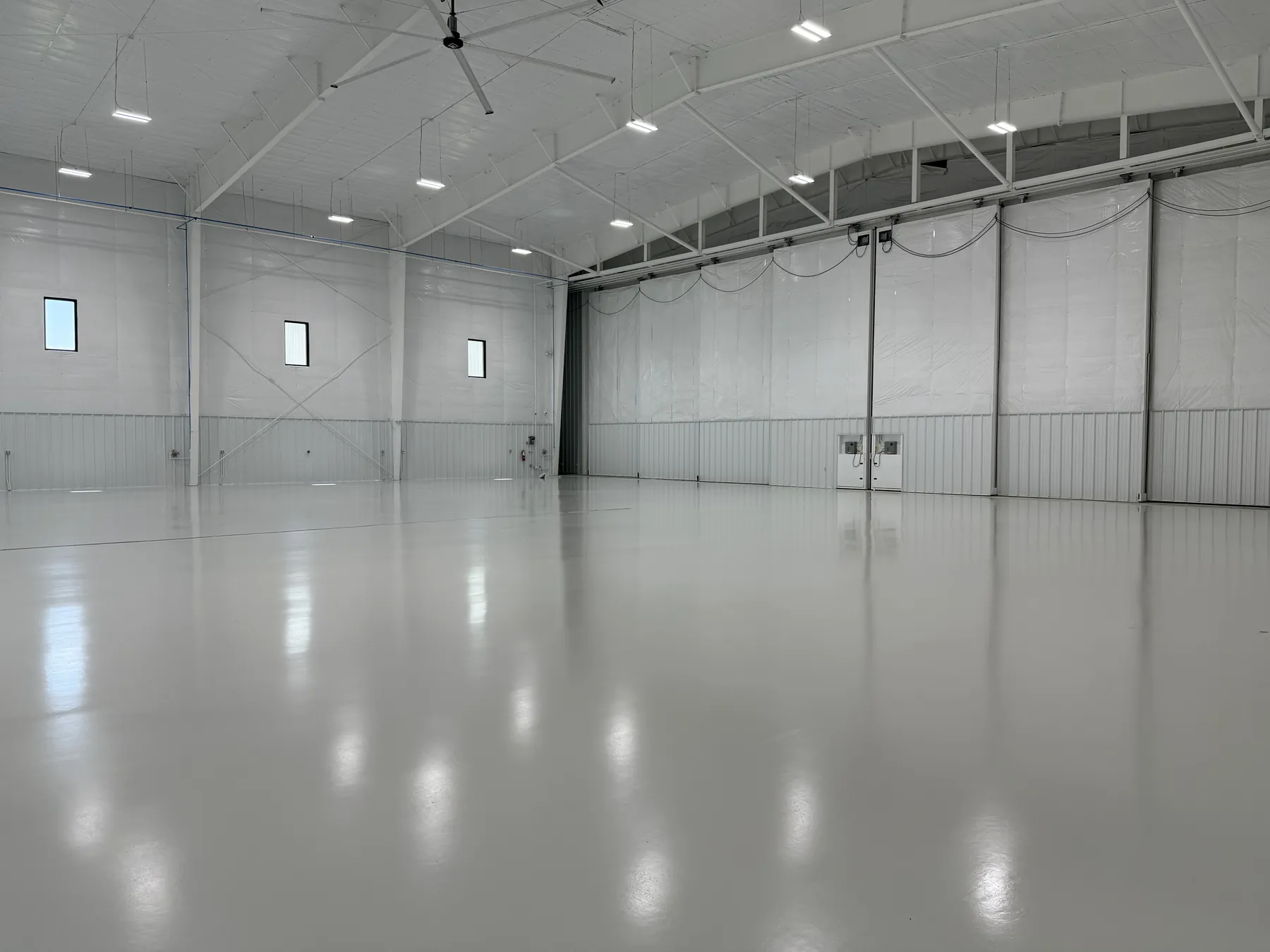
Hangar & MRO Flooring for Kansas City and Springfield Aviation Facilities.

Hangars, MRO bays, ground support equipment areas, and FBO operational spaces. We install epoxy and resinous flooring systems engineered for jet fuel, hydraulic fluid, deicing chemicals, tow-vehicle tire loads, and the operational realities of aviation facilities.

Project in this category? An owner will personally review your quote.

If you operate or manage any of the following aviation facility types in Kansas City, Springfield, or the Midwest, this page is written for you:

Why Generic Epoxy Fails Here

Hangar Floors See Things Most Commercial Floors Never Will.

Jet fuel and avgas spills. Hydraulic fluid leaks. Skydrol and other phosphate ester fluids that destroy ordinary epoxy coatings. Deicing chemicals tracked in on tug tires through a Midwest winter. Solvents from cleaning operations. Battery acid from ground support equipment.

On top of the chemical exposure: concentrated point loads from aircraft jacks, tow tractors, and tooling carts. Tire scrubbing in turn-around zones. Heavy abrasion in maintenance bays where parts and tools impact the floor daily.

A standard commercial epoxy system installed in a hangar will look great for the first year and start failing in the second. The wrong system is the reason — not the installation. Hangar floors need chemical-resistant systems specifically formulated for aviation fluid exposure, with topcoats engineered for the abrasion and impact reality of MRO operations.

The System Decision

The Right System Depends on What Happens in the Bay.

A turbine-engine MRO bay has different needs than a corporate hangar floor. A GSE maintenance area has different needs than an FBO operational space. This is what the site survey figures out.

For most hangar and MRO floors

High-Build Chemical-Resistant Epoxy with Aviation-Grade Topcoat

A high-build epoxy base coat with a chemical-resistant topcoat formulated for aviation fluid exposure handles the majority of hangar applications. The system resists jet fuel, hydraulic fluids, and solvent exposure while standing up to tow-vehicle traffic and tooling impact.

Trade-off: requires periodic recoating in high-wear zones over the floor’s service life. The recoat-friendly nature of the system is actually a feature — you refresh the wear surface without redoing the entire floor.

When chemical exposure is severe

Novolac Epoxy Systems

For bays handling phosphate ester hydraulic fluids, aggressive solvents, or high-concentration acid/caustic exposure (battery shops, certain component cleaning operations), novolac epoxy provides chemical resistance well beyond standard epoxy systems.

Higher up-front cost justified when the chemical environment would chew through a standard system in a year or two.

When the floor is also customer-facing

Quartz Broadcast or Decorative Epoxy

FBO terminals, customer waiting areas, executive corporate hangars where the floor is part of the brand. Quartz broadcast and decorative epoxy systems give you a high-aesthetic, professional finish that still tolerates the operational realities of an aviation environment.

A note on ESD flooring

For avionics shops and sensitive component repair bays, static-dissipative (ESD) flooring is sometimes specified. We install ESD systems when they’re part of a project specification — it’s not our primary aviation focus, but we’re fully equipped to install them properly when the job calls for it.

Ready when you are

Think this is the right fit? Let's talk numbers.

Get a real budget range for your project, or skip ahead and talk to an owner directly. Either way, we'll personally review every request.

Compliance & Standards

Specified to Meet Aviation Facility Requirements.

Aviation facilities operate under multiple overlapping regulatory and operational standards. Every system we install in a hangar or MRO environment is specified with these requirements in mind:

Every project closes out with manufacturer specification sheets, installation records, and chemical-resistance documentation suitable for inspector or insurance review.

Downtime & Aircraft Scheduling

Hangar Floors Get Installed Around Aircraft, Not the Other Way Around.

Aviation facilities have firm scheduling constraints — aircraft maintenance windows, lease milestones, MRO turn times. We structure projects to fit the facility’s reality, not ours.

Approach 1

Phased bay installation

Multi-bay hangars get installed one bay at a time, allowing remaining bays to stay operational. Most common approach for active MRO operations and large corporate hangars.

Approach 2

Aircraft-out windows

When the hangar will be empty during a known maintenance window or aircraft repositioning, we mobilize fast and complete the work before the bay is needed again.

Approach 3

Fast-cure for tight turnarounds

When schedule pressure demands it, we use fast-cure systems that allow return-to-service in 24–48 hours rather than 5–7 days. Higher cost, lower operational impact.

How We Work With Aviation Clients

Every Project Starts With a Site Survey by an Owner.

Michael or Colby personally walks your hangar or MRO facility, evaluates your concrete, asks about your operations and aircraft scheduling, and recommends the right system based on what they see — not what’s most profitable to sell.

Read about our diagnostic-first process

Ready to Start?

Planning a New Hangar Build, MRO Retrofit, or FBO Refresh?

Schedule a site survey. We’ll walk your facility, assess your concrete, and recommend the right system for your operations and aircraft scheduling. Forty-five minutes of an owner’s time, no obligation.

Or schedule a site survey directly ›