Home›Industries›Manufacturing & Warehousing
Industries We Serve
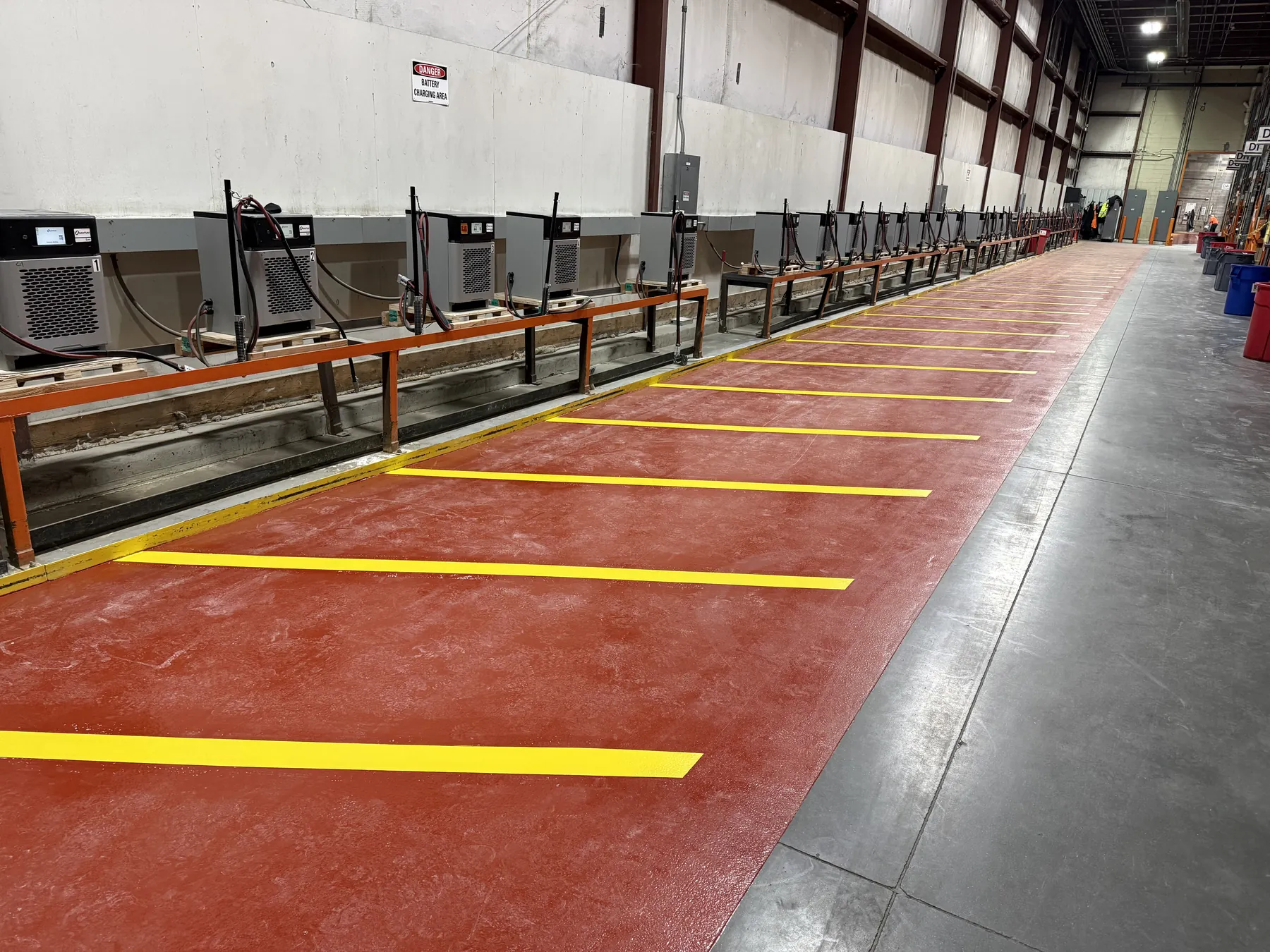
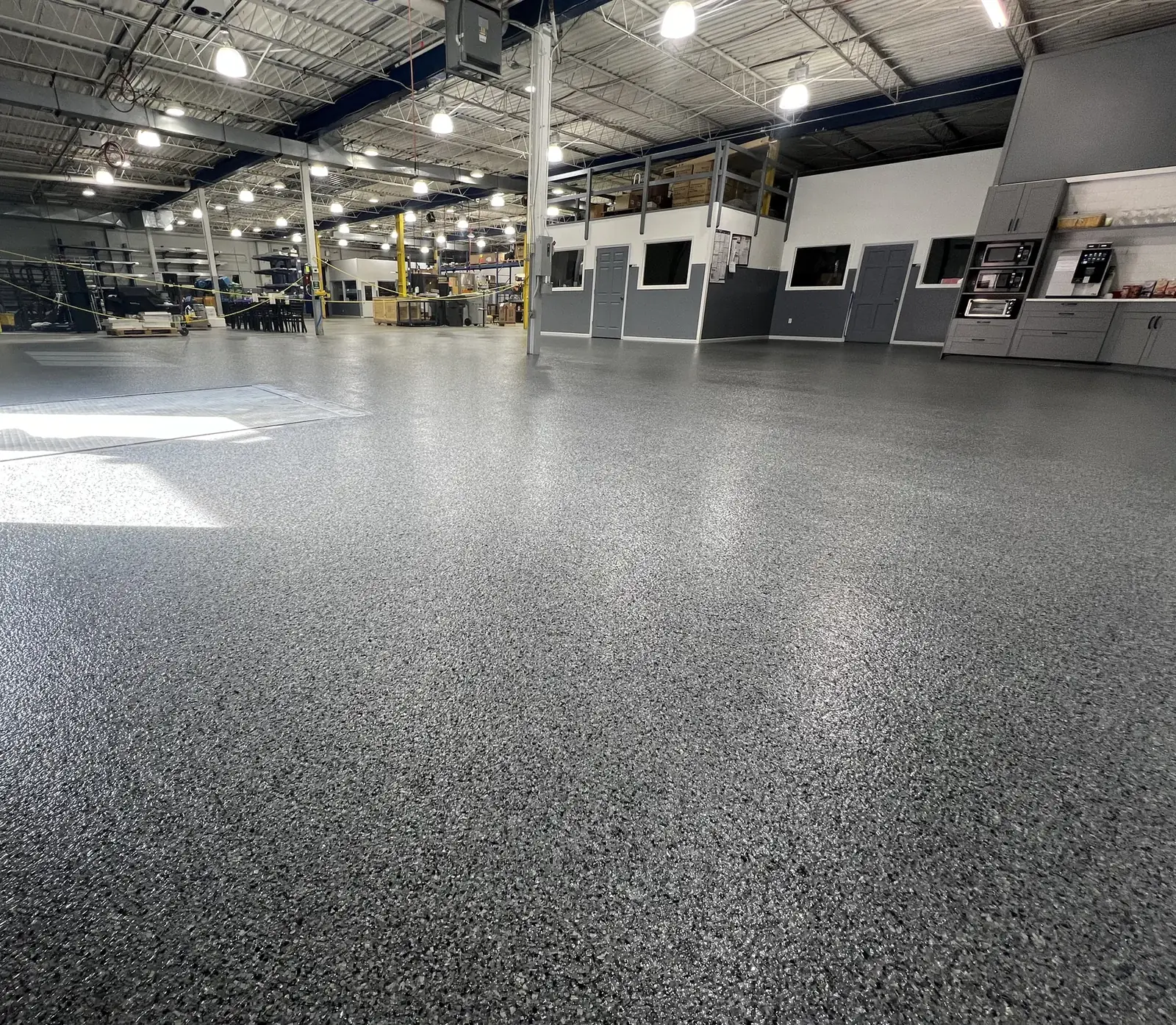
Large-square-footage installations engineered for forklift traffic, point loads, oil and solvent exposure, and the operational realities of running production. Epoxy and resinous flooring systems specified for the way your facility actually runs — not whatever system the contractor happens to sell.
If you operate or manage any of the following industrial facility types in Kansas City, Springfield, or the Midwest, this page is written for you:
Why Generic Epoxy Fails Here
The biggest enemy of an industrial floor isn’t one dramatic event — it’s the constant grind of operations. Forklift wheel loads concentrating thousands of pounds onto a few square inches. Tow vehicle and pallet jack traffic running the same paths thousands of times a year. Hot tire pickup from forklift drives. Dropped tools, fallen pallets, kicked equipment.
Layered onto the mechanical wear: hydraulic and machine oil leaks that aren’t cleaned up immediately, solvent exposure from cleaning operations, occasional spills of whatever the facility actually handles. None of it is dramatic on its own. All of it adds up to a floor that fails years before it should.
A standard commercial epoxy installed in a high-traffic warehouse will look great for the first eighteen months, then start showing wear in the main aisles, then start delaminating at the loading dock turnarounds. By year three the floor is a maintenance liability instead of an asset. The wrong system is the reason — not the installation.
The System Decision
A pick-and-pack distribution warehouse needs a different system than an injection-molding operation. A long-haul logistics dock has different priorities than a precision-machining floor. This is what the site survey figures out.
For most distribution and warehousing
High-build epoxy base with a topcoat engineered for forklift traffic and pallet-jack abrasion. Handles the operational reality of most warehousing and assembly facilities at a cost-per-square-foot that scales to large square footage.
Trade-off: high-traffic aisles and turnaround zones may need recoating before the rest of the floor. We design the system so wear surfaces can be refreshed without redoing the entire floor.
For high-impact and heavy-equipment environments
For facilities with severe impact loads, dropped tooling, heavy machinery installation, or steel-wheeled traffic, polymer-modified mortars with quartz or carbide aggregates extend service life dramatically.
Common applications: heavy fabrication shops, foundries, large-equipment assembly lines, rail-served loading areas.
When chemical exposure is meaningful
Most manufacturing floors see machine oils, hydraulic fluid, and cleaning solvents. A standard chemical-resistant epoxy handles that level of exposure well.
For more aggressive chemistry — metal finishing operations, plating shops, certain processing environments — novolac epoxy systems extend chemical resistance well beyond standard formulations. We’ll be honest with you during the site survey: heavy plating and chemical-processing floors are a specialty within manufacturing, and we’ll tell you if we’re the right contractor for the specific exposure profile.
A Note on Polished Concrete
Polished concrete is a great solution for many large industrial spaces — and we’re probably not the best contractor for a 50,000-square-foot polish job. That’s a different specialty, and the contractors who do it well do it as their primary business.
We do polish smaller areas as a courtesy when we’re already on-site installing a resinous floor in an adjacent area. And we maintain a network of polished-concrete partners we trust — if your project is primarily polish work, we’ll connect you with the right contractor for the job, no commission, no quid pro quo.
Reputation is worth more than any single project we shouldn’t have taken.
Downtime & Production Scheduling
Production downtime is revenue loss — and in many facilities, contractual penalties or missed shipments. We structure flooring projects to fit your operations, not the other way around.
Approach 1
Large warehouses and production floors get installed in defined zones, allowing the rest of the facility to continue operating. The most common approach for active manufacturing and distribution sites.
Approach 2
Many facilities run reduced or no production over weekends, holidays, or annual maintenance shutdowns. We mobilize fast and complete the work inside those windows whenever the calendar allows it.
Approach 3
When schedule pressure demands return-to-service in 24–48 hours instead of 5–7 days, fast-cure resinous systems make it possible. Higher cost per square foot, lower revenue impact.
How We Work With Manufacturing Clients
Michael or Colby personally walks your facility, evaluates your concrete, asks about your operations and production scheduling, and recommends the right system based on what they see — not what’s most profitable to sell.
Read about our diagnostic-first processReady to Start?
Schedule a site survey. We’ll walk your facility, assess your concrete, and recommend the right system for your operations and production schedule. Forty-five minutes of an owner’s time, no obligation.