Home›Industries›Commercial & Institutional
Industries We Serve
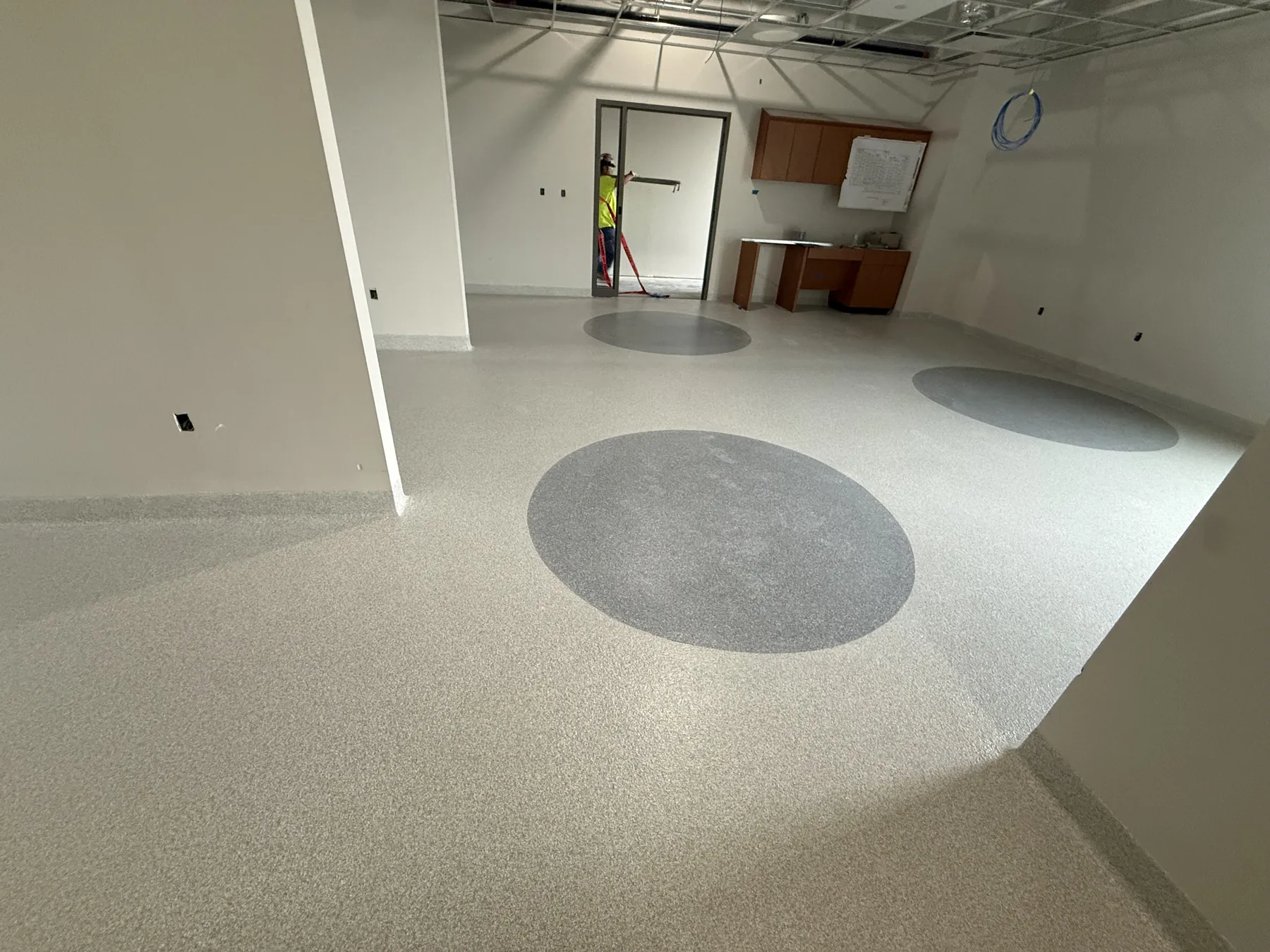
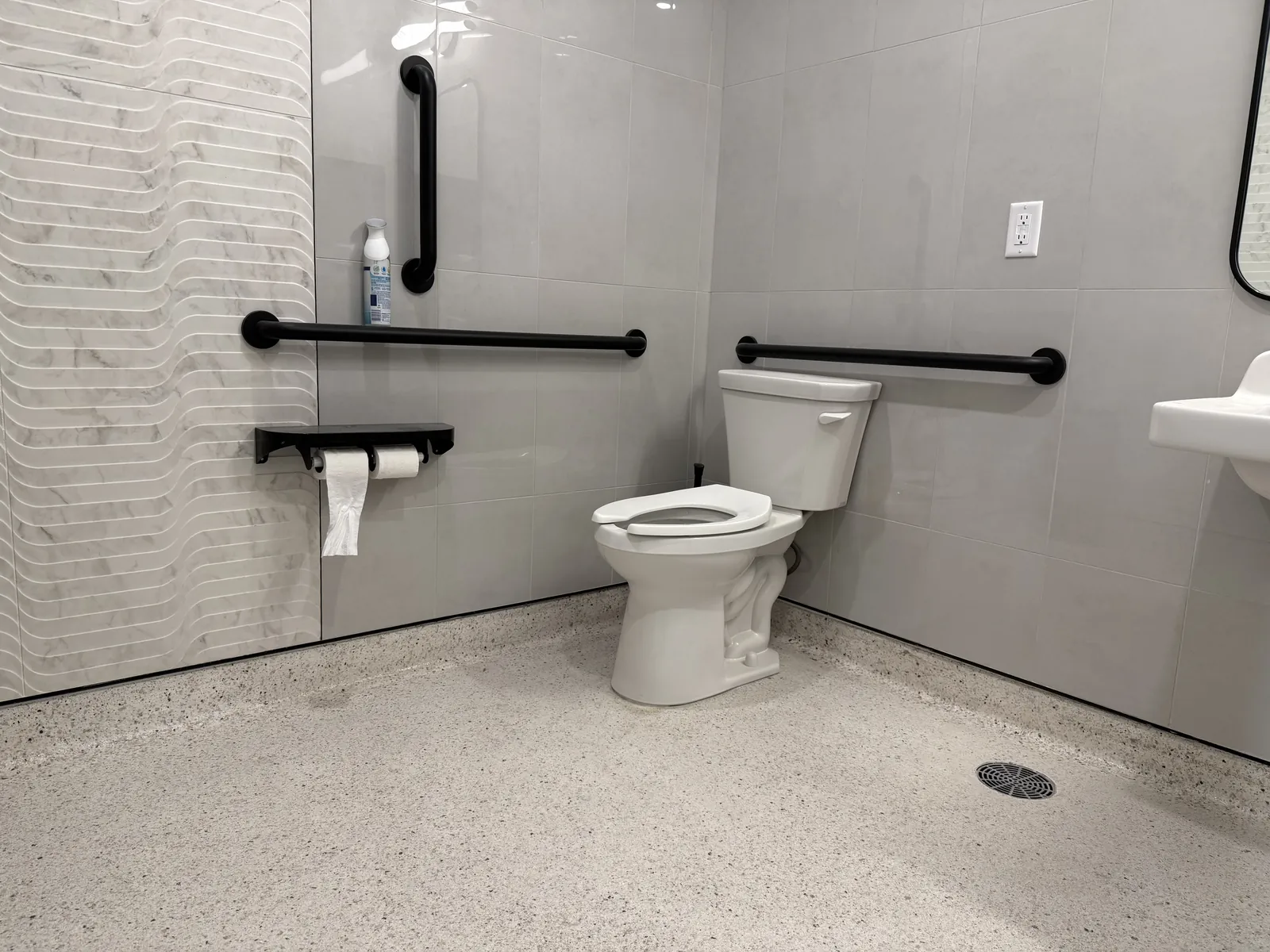
Inside every school, fire station, surgery center, and vet clinic are the wet, sanitary, hard-working spaces that fail first when the wrong floor was specified. We install slip-resistant resinous and antimicrobial flooring engineered for those rooms specifically — plus the broader institutional facility work that lives around them.
If you operate or manage any of the following institutional facility types in Kansas City, Springfield, or the Midwest, this page is written for you:
Who We Work With
Schools & School Districts
Most school flooring work happens in a tight summer-break window between June and August. We schedule and crew accordingly — multi-building districts get phased so every campus is operational by the first day back.
Locker rooms, restrooms, kitchens, athletic facilities, science labs, and shop/CTE spaces are where institutional epoxy work concentrates.
Healthcare & Surgery Centers
Surgery centers, ASCs, procedure suites, outpatient clinics, urgent care, and physical therapy facilities need antimicrobial-treated, chemical-resistant systems with integral cove bases that don’t harbor contamination.
Most healthcare work is phased zone-by-zone or scheduled into off-hours so patient operations continue during installation.
Public Safety Facilities
Fire stations, police stations, and EMS bases run 24/7. Apparatus bays handle vehicle drips, road grime, and wash-down cycles. Decon areas need easy-to-clean, chemically-resistant surfaces.
We work around shift schedules and emergency-response operations — the apparatus has to be available even when the floor is being installed.
Veterinary & Pet Care
Veterinary clinics, pet boarding, daycare, grooming, and animal hospitals face constant biological contamination, aggressive sanitation chemistries, and slip-and-fall risk in wet conditions.
We install antimicrobial-treated systems with integral coving and slip-resistant aggregates for the wet rooms specifically.
Why Generic Epoxy Fails Here
A school locker room sees hundreds of wet feet, dropped shower products, and aggressive nightly cleaning solutions. A fire station has crews tracking in dirt, water, and fuel residue at all hours. A surgery center demands daily disinfection with chemicals most coatings can’t tolerate. A vet boarding facility deals with constant biological contamination and chemical sanitation cycles.
None of those environments are dramatic. All of them are relentless. And the consequences of the wrong floor are real — slip-and-fall incidents, sanitation citations, biological contamination risks, and floor failures that turn into liability events.
A standard commercial epoxy installed in a high-use restroom or locker room will be slick when wet, will start delaminating at the floor drains, and will fail at the cove base joint within two years. The wrong system is the reason — not the installation.
An Emerging Trend
If your facility has been on a cycle of replacing sheet vinyl every seven to ten years, you’re not alone — and you’re not stuck with that cycle. Hospital systems, ambulatory surgery centers, and outpatient procedure suites across the Midwest are switching to seamless resinous flooring. Here’s the conversation we have with facility managers who are evaluating it.
What sheet vinyl wasn’t built for
What seamless resinous offers
An honest note on cost
Resinous flooring costs more up front than sheet vinyl — sometimes meaningfully more. The math works on a total-cost-of-ownership basis, not on first-install cost. We’ll walk you through that math during the site survey using your facility’s actual square footage, current vinyl replacement cycle, and disinfection protocol — so you can decide whether the switch makes sense for your specific situation rather than buying our pitch.
The System Decision
A school cafeteria has different needs than the same school’s wrestling locker room. A clinic exam room has different needs than the same clinic’s breakroom. This is what the site survey figures out.
For locker rooms, restrooms, and shower areas
Aggregate-loaded systems with engineered slip resistance handle constant moisture, foot traffic, and aggressive cleaning chemistries. Integral cove bases at the wall transition prevent the failure mode where standard floors delaminate at floor-to-wall joints.
Trade-off: higher cost than a basic epoxy. Lower cost than dealing with a slip-and-fall claim or an early floor replacement.
For healthcare, vet, and infection-prevention environments
For clinics, surgery centers, vet exam rooms, and other environments where infection control matters, antimicrobial-additive systems suppress microbial growth on the floor surface. Specified to support the cleaning protocols required by your facility type.
Antimicrobial flooring isn’t a substitute for cleaning protocols — it’s a supplement. We’ll discuss what the system actually does and doesn’t do during the site survey, so you have realistic expectations going in.
For breakrooms, lobbies, and customer-visible spaces
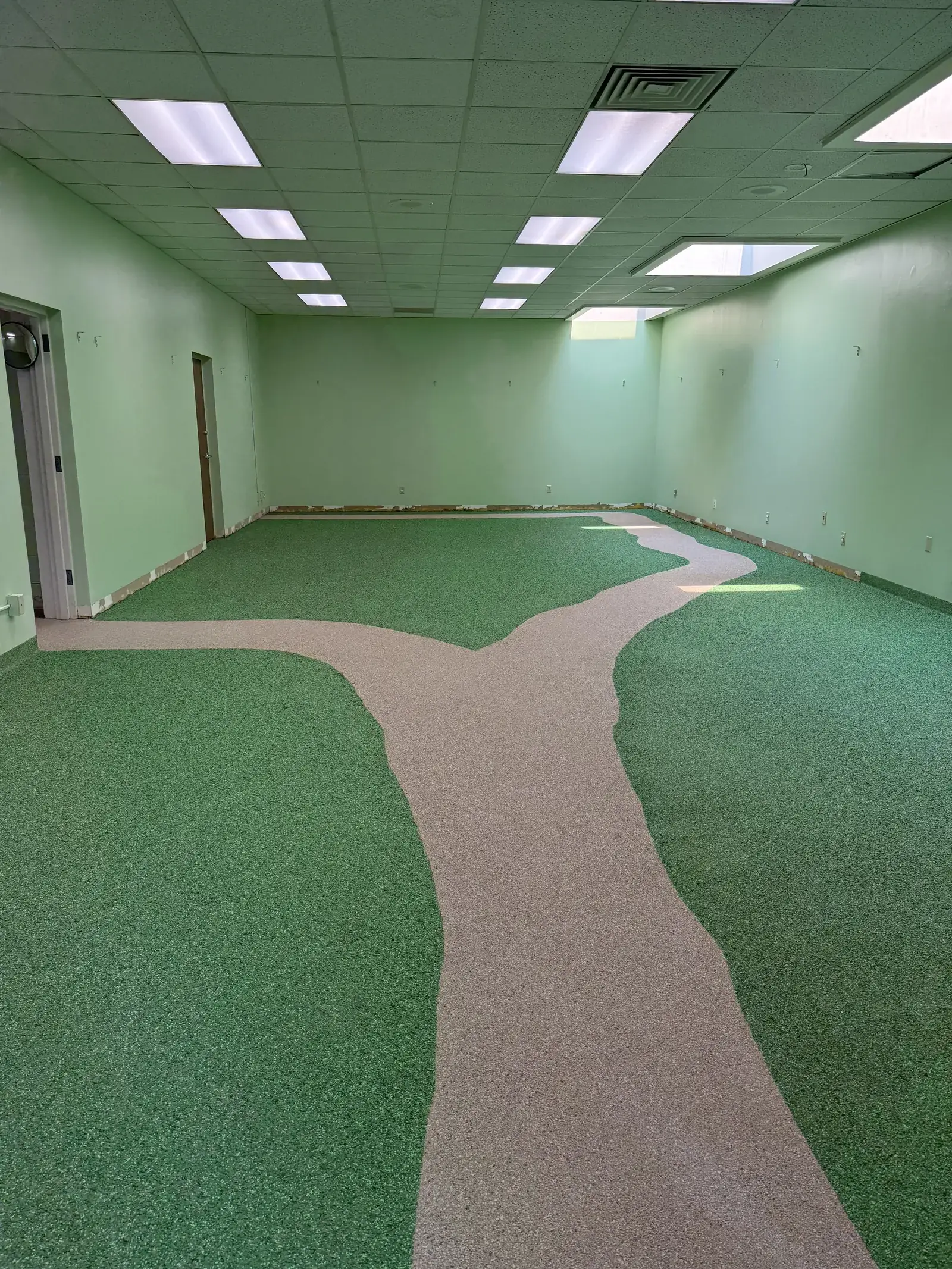
When the floor is part of the brand or part of the patient/client experience, decorative systems give you a high-aesthetic, professional finish that still tolerates the cleaning protocols and traffic of an institutional environment.
Common applications: clinic lobbies, school administrative offices, fire station day rooms, vet practice waiting areas.
By Facility Type
Specific notes for each of the major institutional buyer types we work with.
Schools & Districts
Most school flooring work happens in the summer break window — a hard 8-10 week deadline with no extensions. We schedule district contracts around that constraint and often work multiple buildings in parallel to hit the August deadline.
For multi-building bond work, we coordinate with district facilities teams and general contractors to fit flooring into the larger renovation sequence.
Healthcare
Healthcare facilities require antimicrobial systems with seamless cove bases, integral drains where applicable, and finish profiles compatible with the cleaning chemistries your facility actually uses.
We coordinate installations around clinic schedules — typically working evenings, weekends, or during planned closures rather than disrupting patient care.
Public Safety
Apparatus bays, decontamination areas, locker and shower rooms, day rooms, and dispatch areas all have different requirements. Apparatus bays especially see fuel residue, road grime, and brake dust that destroy standard floors quickly.
We schedule around 24/7 station operations — phased work that keeps the station functional while installation is underway.
Veterinary & Pet Care
Vet environments combine the infection-control demands of healthcare with the biological-contamination realities of animal care. Antimicrobial systems with appropriate slip resistance handle both.
Boarding and daycare areas often need different specifications than exam rooms — we walk the whole facility and recommend by area, not by a single facility-wide spec.
Compliance, Safety, & Standards
Different institutional buyers operate under different overlapping requirements. Every system we install is specified with these in mind:
Every project closes out with manufacturer specification sheets, installation records, and product documentation appropriate for inspector, accreditation, or insurance review.
How We Work With Institutional Clients
Michael or Colby personally walks your facility, evaluates the rooms in scope, asks about your operations and scheduling constraints, and recommends the right system for each space — not what’s most profitable to sell.
Read about our diagnostic-first processReady to Start?
Schedule a site survey. We’ll walk your facility, assess your concrete, and recommend the right system for each space — with realistic timelines that fit your operational and budget cycles. Forty-five minutes of an owner’s time, no obligation.