Services Provided / Concrete Preparation
CONCRETE SURFACE PREPARATION
Shot blasting, diamond grinding, scarifying, coating removal, and moisture testing to a documented CSP profile. The step that decides whether every coating above it holds or fails.
WHY COATINGS FAIL
When a resinous floor peels, blisters, or lifts in sheets, the instinct is to blame the product. In our experience it is almost never the product. It is the preparation: a surface that was acid etched instead of mechanically profiled, a slab that was coated over an unresolved moisture problem, or a previous coating that was scuffed rather than removed.
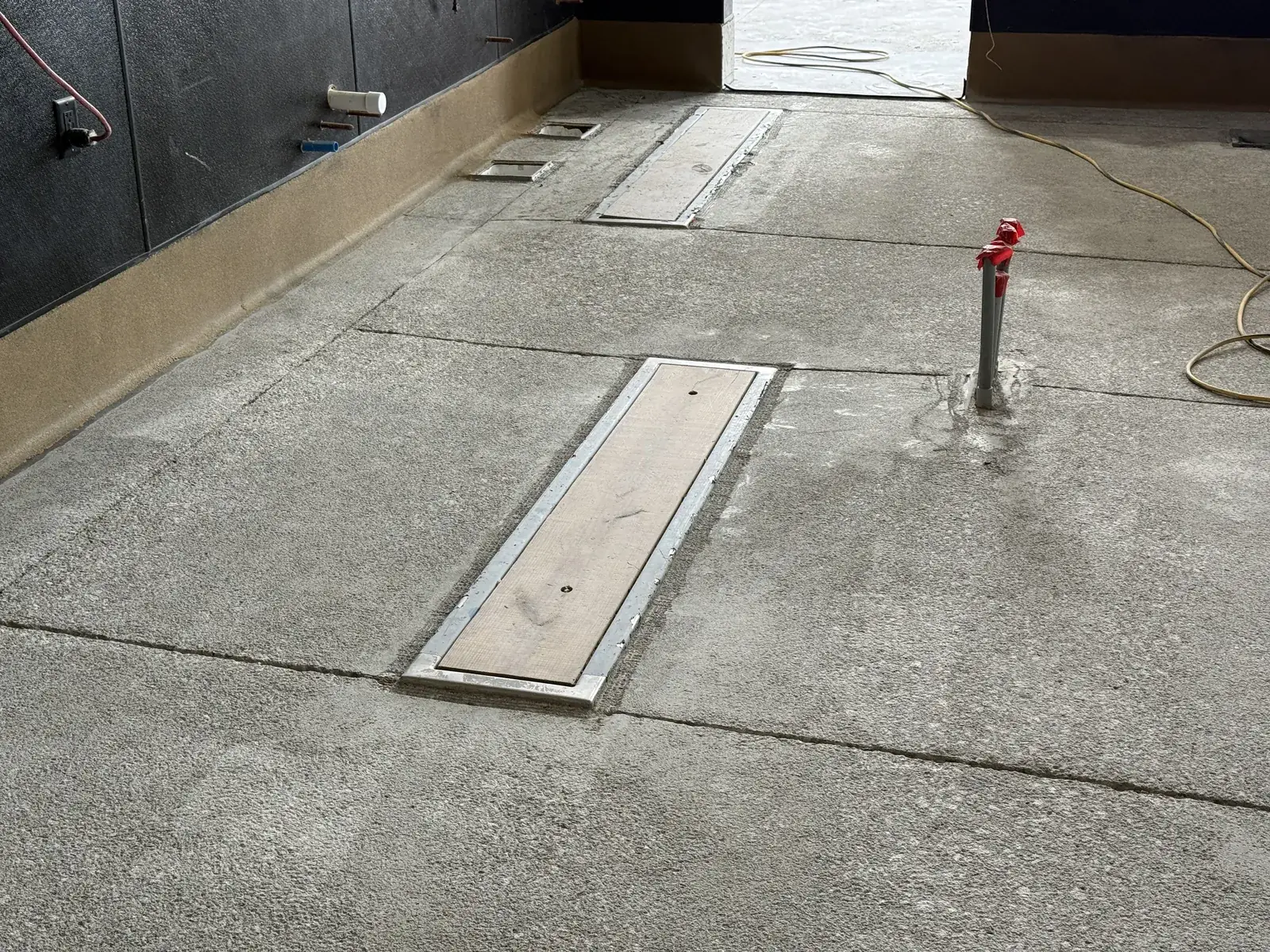
Concrete preparation is measured, not eyeballed. The International Concrete Repair Institute publishes surface profiles from CSP 1 through CSP 9, and every coating manufacturer specifies a minimum profile for their system. A self-leveling epoxy and a quarter-inch urethane cement mortar need very different profiles, and giving a system the wrong one voids the warranty whether or not anyone says so out loud.
This is also the line item most often cut to win a bid. A contractor who quotes preparation light will beat us on price and will be back in two years. We would rather lose that bid than install a floor we know is starting from the wrong surface.
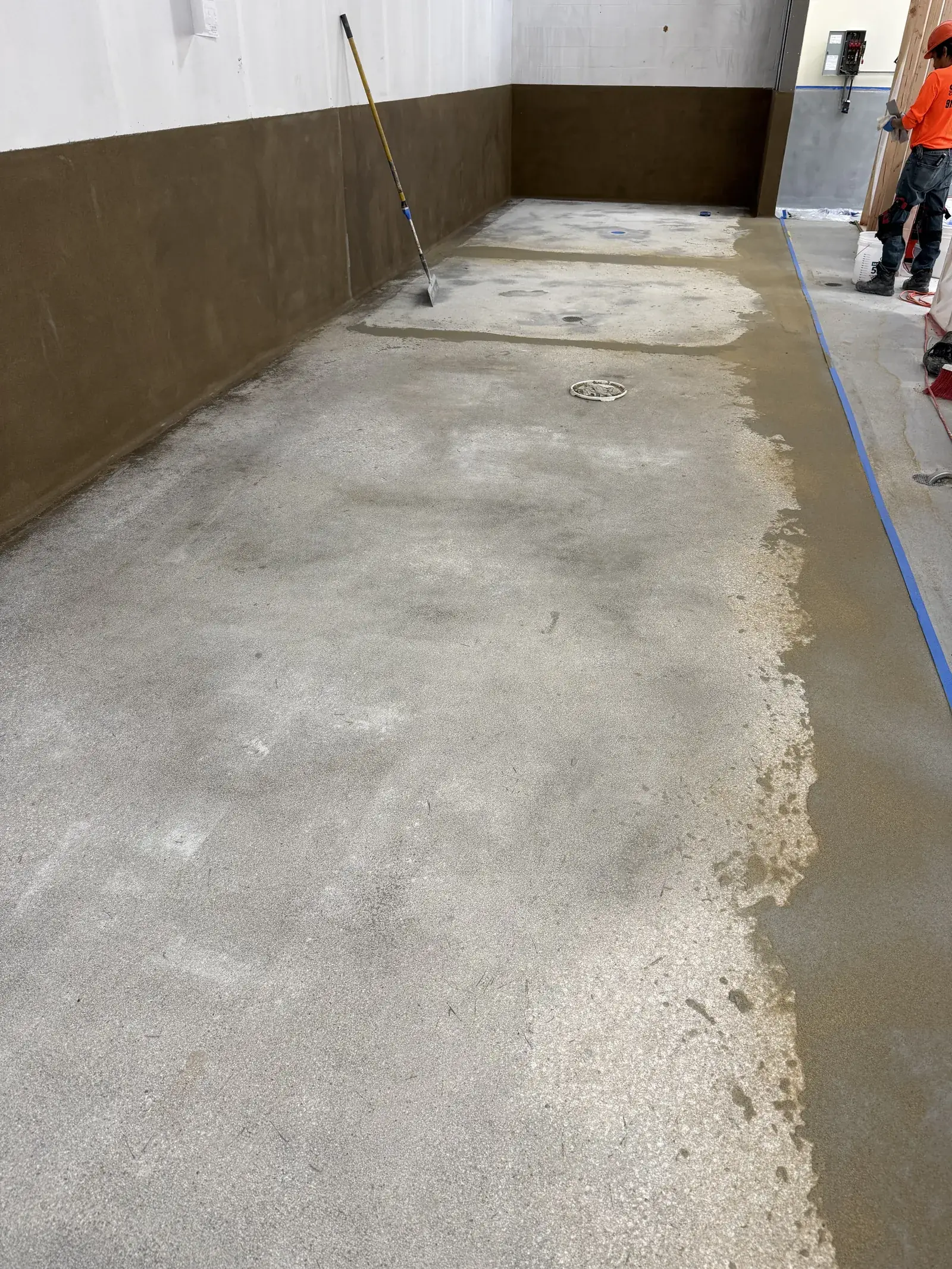
Preparation is a scoped, standalone service, and it is the right call when:
THE METHODS
Preparation is not one machine. The right method depends on the existing coating, the required profile, the condition of the slab, and how much dust and noise your operation can tolerate.
THE STANDARD
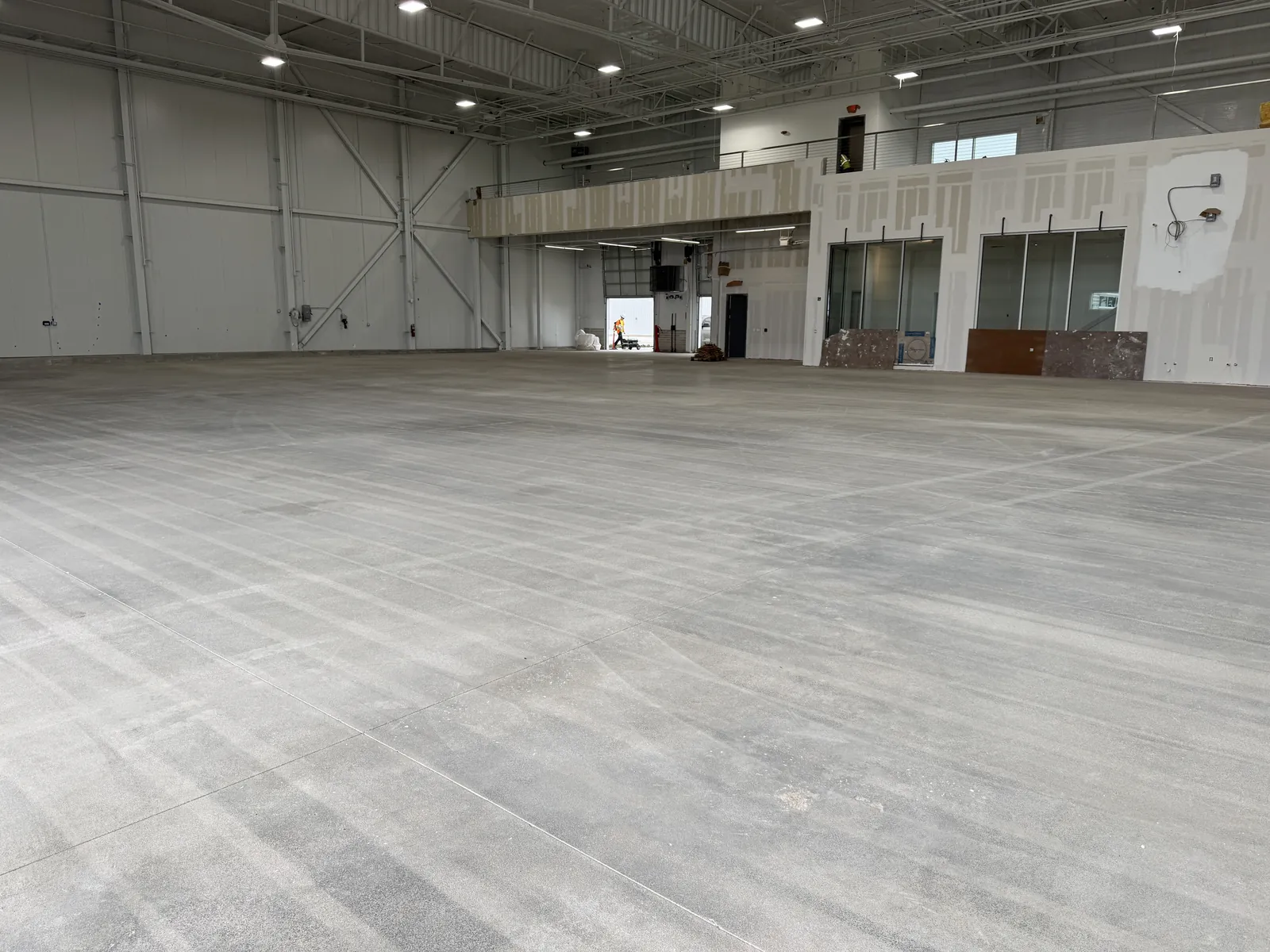
Steel shot propelled at the slab, with the shot and debris recovered in a closed loop. Fast, virtually dust-free, and produces a consistent, repeatable profile across large areas. The default method for open warehouse and plant floors.
Typical profile: CSP 3 to CSP 5. Best for large open areas and most coating systems.
PRECISION
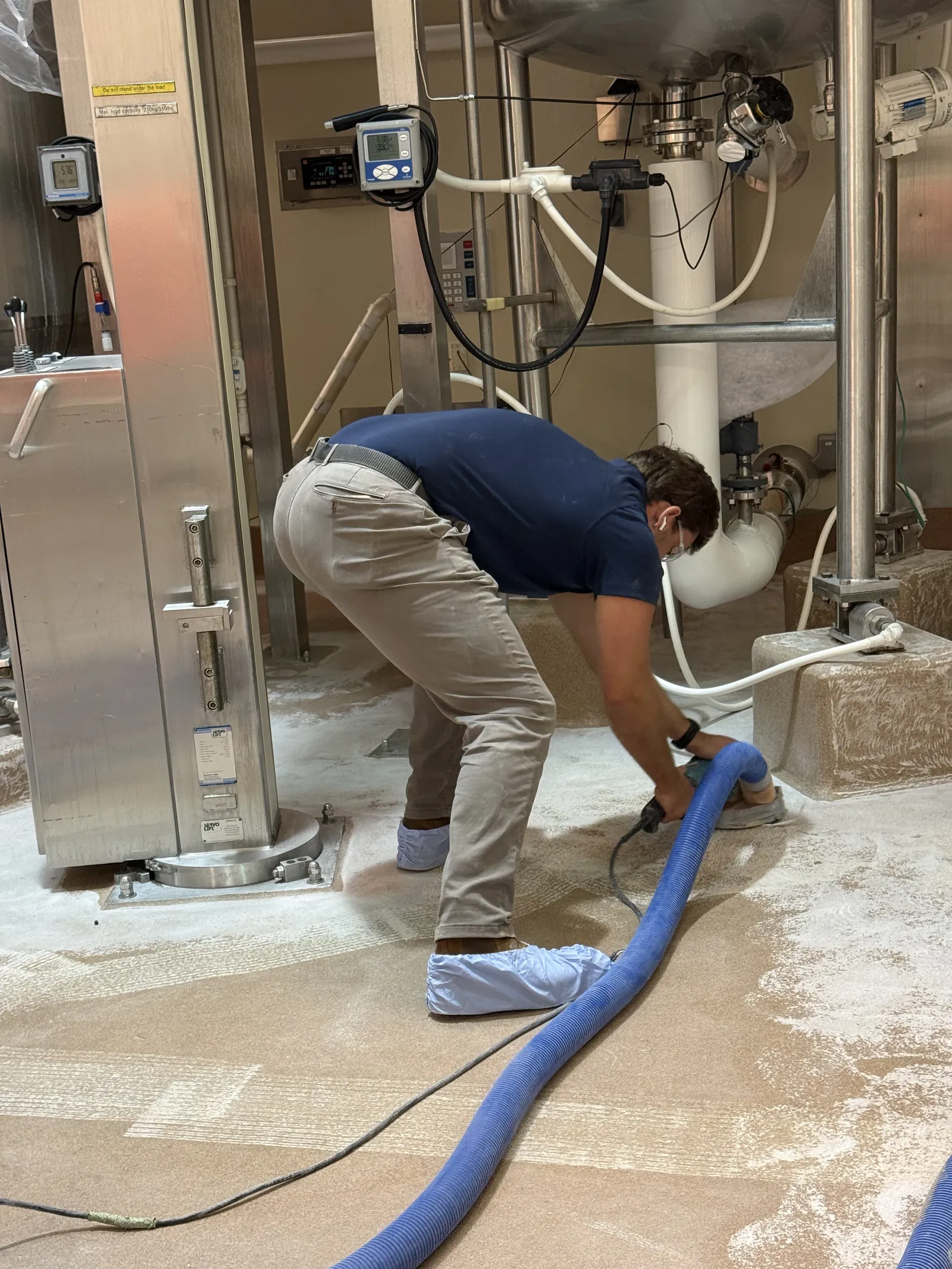
Diamond tooling on a planetary grinder, run wet or dry with vacuum recovery. Delivers a flatter, finer result than shot blasting and is the correct method for edges, corners, small rooms, and any slab headed toward a polished or thin-film finish.
Typical profile: CSP 1 to CSP 3. Best for detail work, thin-film systems, and polishing.
AGGRESSIVE REMOVAL
Rotating cutters that remove material aggressively, including thick coatings, heavy mastic, laitance, or high spots that grinding and blasting will not touch efficiently. Leaves a deep profile that usually needs a follow-up grind before a finish system goes down.
NOT OPTIONAL
Calcium chloride and relative humidity probe testing per ASTM F1869 and F2170 before a system is selected. Moisture vapor drive is the single most common cause of coating failure in the Midwest, and it is fully preventable if it is measured before rather than discovered after.
AN HONEST READ
Preparation is where budgets get quietly gutted. The distinctions worth holding onto:
We quote preparation as its own documented scope so you can see exactly what you are buying rather than finding it buried in a square-foot number.
WORKING AROUND YOUR OPERATION
Dust, noise, and vibration are real constraints in an occupied facility. Every one of them is manageable with the right method and the right window.
CONTAINMENT
Closed-loop shot blasting and HEPA-vacuumed grinding keep dust out of your product, your equipment, and your air handlers. In food and clean environments we add negative air containment around the work zone.
OPTION 1
Preparation is the easiest phase to run overnight or on weekends, because it needs no cure time. Prepping off-shift often lets the finish system go down during normal hours.
OPTION 2
We are regularly hired to deliver a substrate to a documented profile for another contractor's finish, or for a manufacturer's own crew. We will hand off with profile documentation and moisture results.
HOW WE WORK
Michael Groff or Colby Coda walks the slab, identifies what is actually on it, tests for moisture, checks flatness and joint condition, and determines which method and profile the finish system requires. Thirteen years of installing over prepared concrete is what makes this call reliable, because we have seen what happens both ways.
Read about our diagnostic-first processSTART HERE
Tell us what is on the floor now and what is going over it. We will tell you the method, the profile, and what the preparation actually costs before anyone commits.