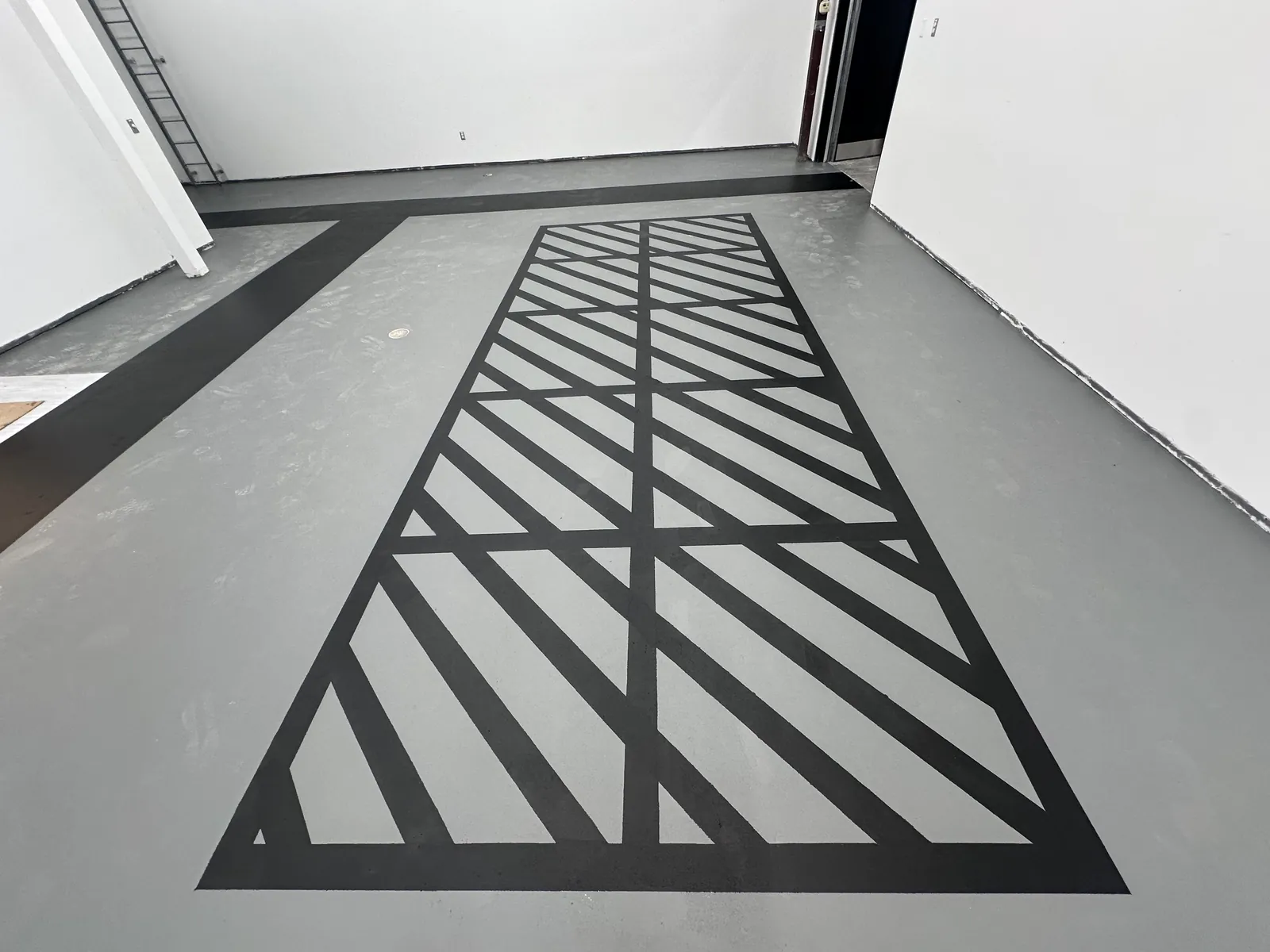
Services Provided / Line Striping
FLOOR MARKING AND SAFETY LAYOUT
Aisle striping, pedestrian walkways, safety zones, equipment footprints, and full floor layout for distribution centers, manufacturing plants, and warehouses across the Midwest.
WHY MARKINGS FAIL
OSHA requires permanent aisles and passageways to be appropriately marked and kept clear. What it does not do is tell you how to mark them in a way that survives forklift traffic, and that gap is why most warehouse floors end up with a patchwork of half-peeled tape, faded paint, and lines that no longer match where the racking actually is.
The practical failure is worse than the compliance one. When markings degrade, operators stop treating them as boundaries. Pedestrian walkways become suggestions. Staging zones creep. Equipment footprints blur. The layout stops governing behavior, which is the entire reason it exists.
Durable floor marking is a specification problem, not a painting problem. The material has to match the traffic, the substrate has to be prepared so the material bonds, and the layout has to be shot correctly against the racking before a single line goes down.
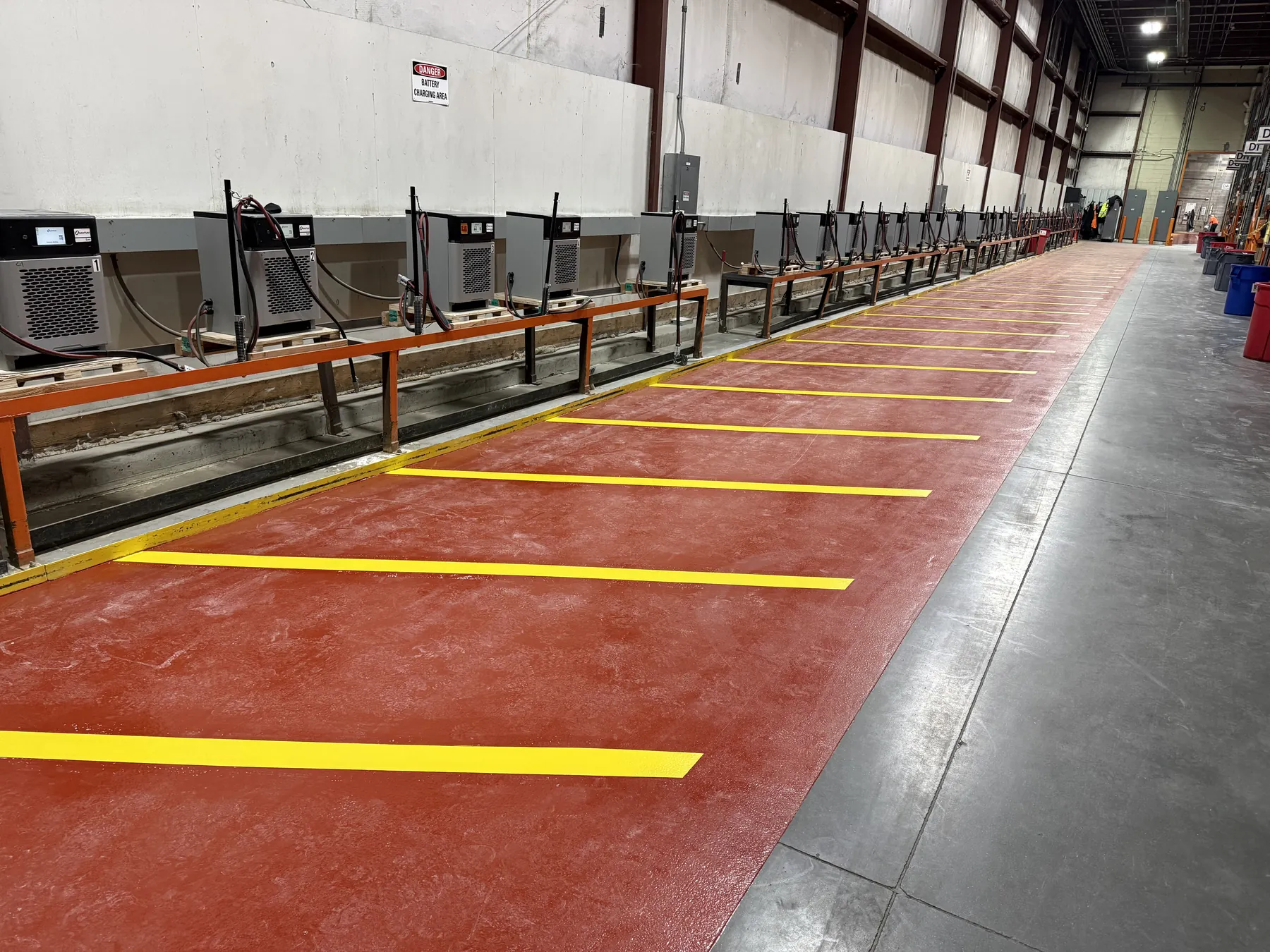
Line striping and floor marking belong in the plan when:
THE MARKING METHODS
The right method depends on the traffic crossing the line, the substrate underneath it, and how permanent the layout actually is.
MOST DURABLE
Lines installed as part of a resinous floor system: shot blasted in, filled with a compatible resin, and clear coated over so the marking is inside the floor rather than on top of it. Nothing crossing it can peel it up.
Best for: permanent layouts, new resinous floors, and heavy forklift crossings.
THE WORKHORSE
Mechanically prepared substrate with a high-solids two-component marking material. Dramatically outlasts single-component traffic paint under hard-wheeled traffic, and can be applied to bare, sealed, or previously coated slabs.
Best for: existing warehouse slabs where a full floor system is not in scope.
FAST TURNAROUND
Where the layout may change, the budget is tight, or the floor needs to be back in service within hours, a properly prepared fast-cure marking gets the lines down quickly. Shorter service life, and we will say so up front rather than after.
LAYOUT WORK
Aisle numbering, dock numbers, directional arrows, hazard hatching, equipment footprints, and OSHA-aligned color conventions. We shoot the layout against your actual racking and confirm it with you before anything is permanent.
AN HONEST READ
This is a service where the cheap option is sometimes correct. The distinctions:
We scope striping as part of a facility floor plan with a recommended refresh interval, not as a one-off paint call.
WORKING AROUND YOUR OPERATION
Fast-cure marking materials mean the aisle you worked this morning is usually back under traffic the same day.
SAME DAY
We work one aisle or zone at a time and release it back before the shift needs it. In most facilities nothing beyond the active work area ever comes out of service.
OPTION 1
Where the floor is busy through every shift, we run striping overnight or on weekends. Layout and preparation happen first; the lines go down and cure before you reopen.
OPTION 2
For facilities where markings take real abuse, we set a refresh interval and walk the floor on a schedule so striping is a planned line item rather than an audit response.
HOW WE WORK
Michael Groff or Colby Coda walks the building, confirms the layout against your racking and your traffic patterns, checks the substrate condition where the lines will go, and recommends the marking method that matches how hard those lines will actually get hit. If we think tape is the right answer for part of the building, we will tell you that too.
Read about our diagnostic-first processSTART HERE
Send us the building size and the layout situation. We will walk it, recommend the marking method, and price it as a plan rather than a patch.